
Disclosure: This post contains affiliate links. If you buy something through one of them, we may earn a small commission at no extra cost to you.
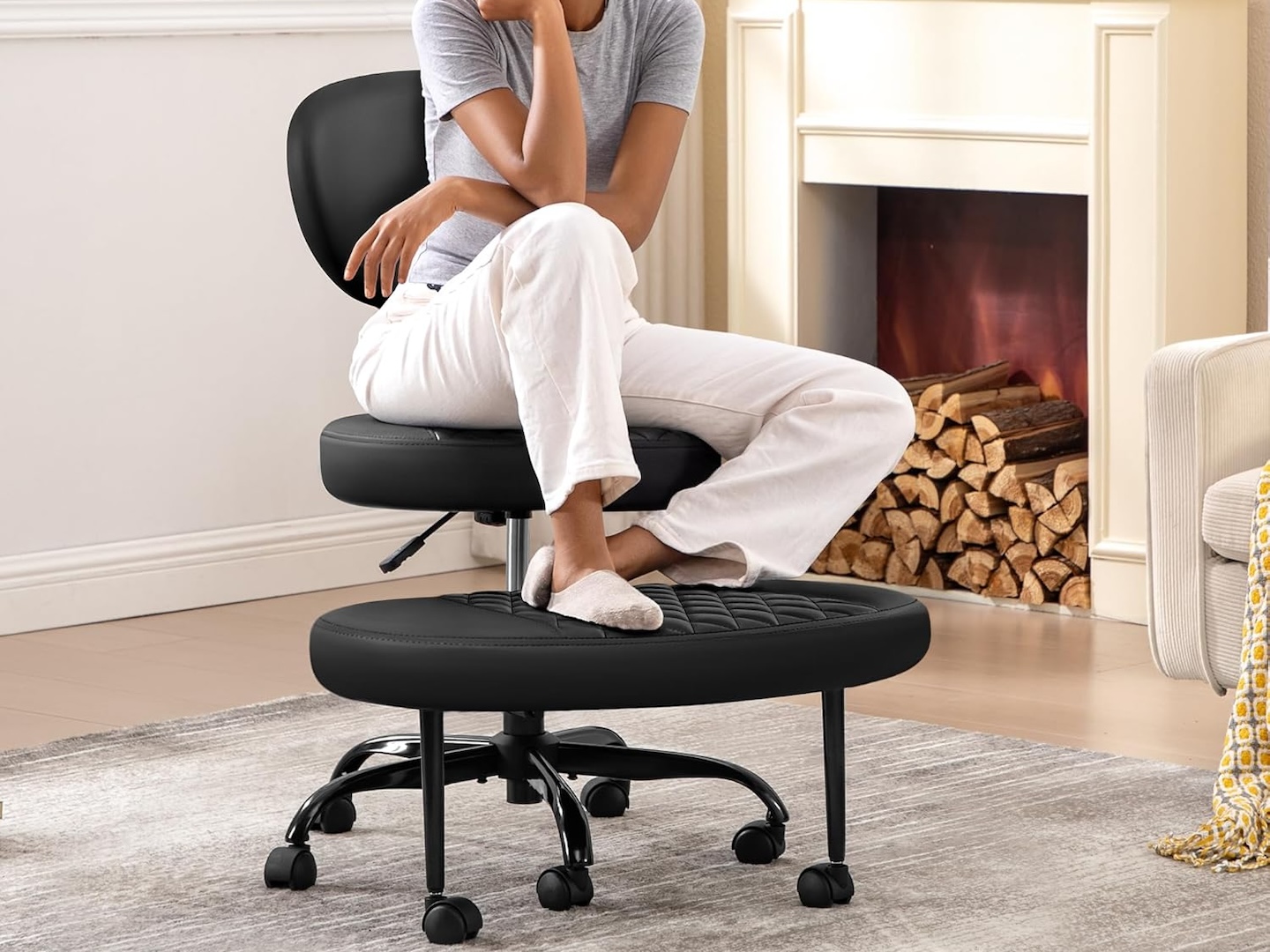
The AtHope Cross-Legged Office Chair is the product that put this brand on my radar in the first place. It is priced around $119 to $130 depending on color, and instead of a normal seat-and-floor setup, it uses a raised, 360-degree rotating footstool built into the base. I went through the product listing and a stack of buyer reviews to see whether it earns the “better than my Herman Miller” comparisons floating around.
What it’s made of
The seat and footstool are wrapped in PU leather with a breathable, perforated pattern. Underneath, both the seat and footstool are filled with high-density sponge rather than the thin foam you find on cheaper stools. The base sits on standard office chair wheels and adjusts for height, and the backrest carries built-in lumbar support.
What actually makes it different from a normal desk chair is the footstool. It rotates a full 360 degrees and sits at a height meant for tucking one or both legs underneath you, so you can sit cross-legged, kneel with your shins resting on it, or perch with your legs to one side.
What buyers are actually saying
The reviews I found consistently focus on one thing: comfort over long sitting stretches. One buyer described the seat as “spacious and supportive,” adding they didn’t feel their thighs going numb even after sitting for long periods, which is a common complaint with narrower kneeling chairs.
The strongest review came from a buyer with ADHD who said the chair let them work for three straight hours without needing to get up, something they called “simply impossible” in their Herman Miller chair. They credited the flexibility to sit in different positions with helping them stay focused instead of fidgeting out of the seat entirely. Another buyer put it more simply: the first few days felt strange, but now normal chairs feel restrictive by comparison.
The complaint pattern that shows up across AtHope’s broader chair catalog, most often on the more traditional models, is worth knowing before you order: a backrest that sits lower than photos suggest, armrests that some buyers flip up rather than work around, and seat padding on the firmer side. I go through that pattern brand-wide in my full AtHope brand review.
Colors and sizing
It comes in White, Black, Off White, Dark Gray, and Dark Brown, so it is easy to match to most home office setups. Assembly follows the same pattern as AtHope’s other chairs: expect a bag of hardware, a printed instruction sheet, and roughly 20 to 30 minutes of work. I cover tools and tips in my assembly and care guide.
How it compares to Pipersong
Pipersong’s version of this concept, the Meditation Chair PRO, runs $299, sometimes discounted from $399. It adds memory foam cushioning and a steel, SGS-certified hydraulic base with a 1-year warranty. Pipersong’s own reviewers have flagged the cushion as too hard for some sitters and raised concerns about long-term durability of the white pleather option. AtHope’s version costs less than half as much and uses the same basic PU leather and high-density sponge approach without the premium materials. I break the full comparison down in AtHope vs Pipersong.
Should you buy it
If you already sit cross-legged in your desk chair, fidget through long work sessions, or just want to try alternate-posture seating without spending $300 on Pipersong, this is a low-risk way to test the idea. It will not replace a high-end ergonomic chair for someone who sits perfectly upright all day, but for people who do not sit still, the reviews suggest it earns the comparisons it gets.
Before you buy, check my notes on where to buy authentic AtHope chairs so you land on a real listing, and see how to keep the PU leather from cracking once it arrives.
Keep reading: my full AtHope brand review, how to choose the right AtHope chair, and where to buy AtHope authentically.