
Disclosure: This post contains affiliate links. If you buy something through one of them, we may earn a small commission at no extra cost to you.
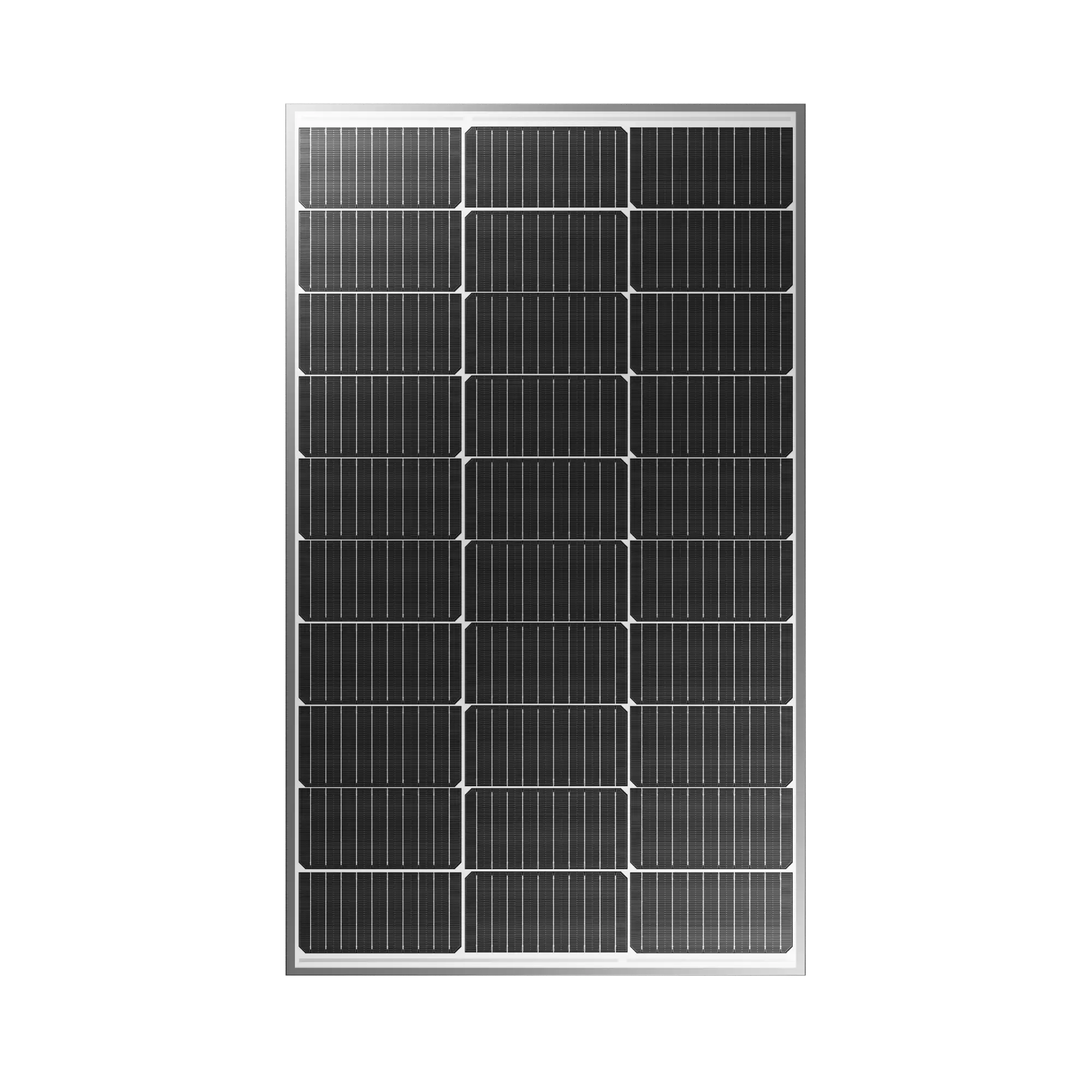
Out of JJN Solar’s entire catalog, one product shows up most often in independent reviews and forum threads: the 100W PERC monocrystalline panel, priced at $59 for a single unit or $119 for a two-pack. I went through the official spec sheet plus a stack of DIY Solar Forum threads to see if the cheap price tag comes with a catch.
What it’s actually built with
This panel uses monocrystalline PERC cells rated at 23% efficiency. On the electrical side, it’s rated for 20.8V open circuit voltage, 6.42A short circuit current, and delivers its optimum output at 17.5V and 5.72A.
Physically, it measures 38.2 by 22.7 by 1.2 inches and weighs 13.4 lbs. It uses standard MC4 connectors and is rated to operate anywhere from negative 40°C to 85°C, which covers everything from a Minnesota winter to a Texas rooftop in July.
The panel carries a 5 year workmanship warranty and a 30 year performance warranty guaranteeing 80 to 83% of rated output, and it’s certified under FCC, CE, RoHS, and ISO standards.
What buyers are actually saying
On DIY Solar Forum, buyers reported picking up pairs of this panel for around $68 each, noting it arrived quickly and well packaged with a built-in carry handle. Several users mentioned the panel’s real world voltage output ran a bit higher than a typical 100W RV panel, which they flagged as a plus for charging efficiency.
The most common praise across threads: consistently strong power delivery, in some cases pushing past the rated wattage in strong sun, along with straightforward installation thanks to the pre-drilled mounting holes.
The most common complaint is shipping related, not performance related. Multiple buyers described panels arriving with cracked corners or bent frames due to thin packaging, with one reviewer noting bluntly that a heavy panel this size needs sturdier protection than it ships with. If your panel arrives damaged, the workmanship warranty covers it, but you’ll want to photograph the box and panel immediately.
Single panel or two-pack?
At $119 for two panels versus $59 for one, the two-pack works out to essentially the same per-watt price, so the decision comes down to your power needs rather than any bulk discount. A single 100W panel suits a small RV battery top-up. A pair wired in parallel gets you closer to running a mini fridge or CPAP machine overnight.
If you’re not sure how much wattage your setup actually needs, I walked through the math in my guide to picking the right JJN panel.
How it compares
Against Renogy’s comparable 100W panel, this one runs noticeably cheaper, roughly $50 to $70 less at similar wattage, but Renogy ships with protective corner guards that this panel lacks. Handle the JJN frame carefully during unboxing and mounting since the edges are unfinished.
For buyers who want more efficiency at a similar budget, JJN’s N-Type version of this same panel bumps efficiency to 25% for about $10 more. But the standard PERC panel reviewed here remains the better value pick for straightforward RV or boat charging.
Should you buy it
If you want real wattage, a legitimate 30 year performance warranty, and don’t need a brand name on the frame, this is the easiest entry point into JJN’s catalog. Inspect it the moment it arrives, mount it with gloves on, and register your warranty with the original invoice in case you ever need to file a claim.
For where else to buy it safely and avoid counterfeit listings, see my guide to buying JJN Solar authentically. For mounting and long-term upkeep, check how to install and maintain a JJN panel.