
Disclosure: This article contains affiliate links. If you buy through them, I may earn a small commission at no extra cost to you.
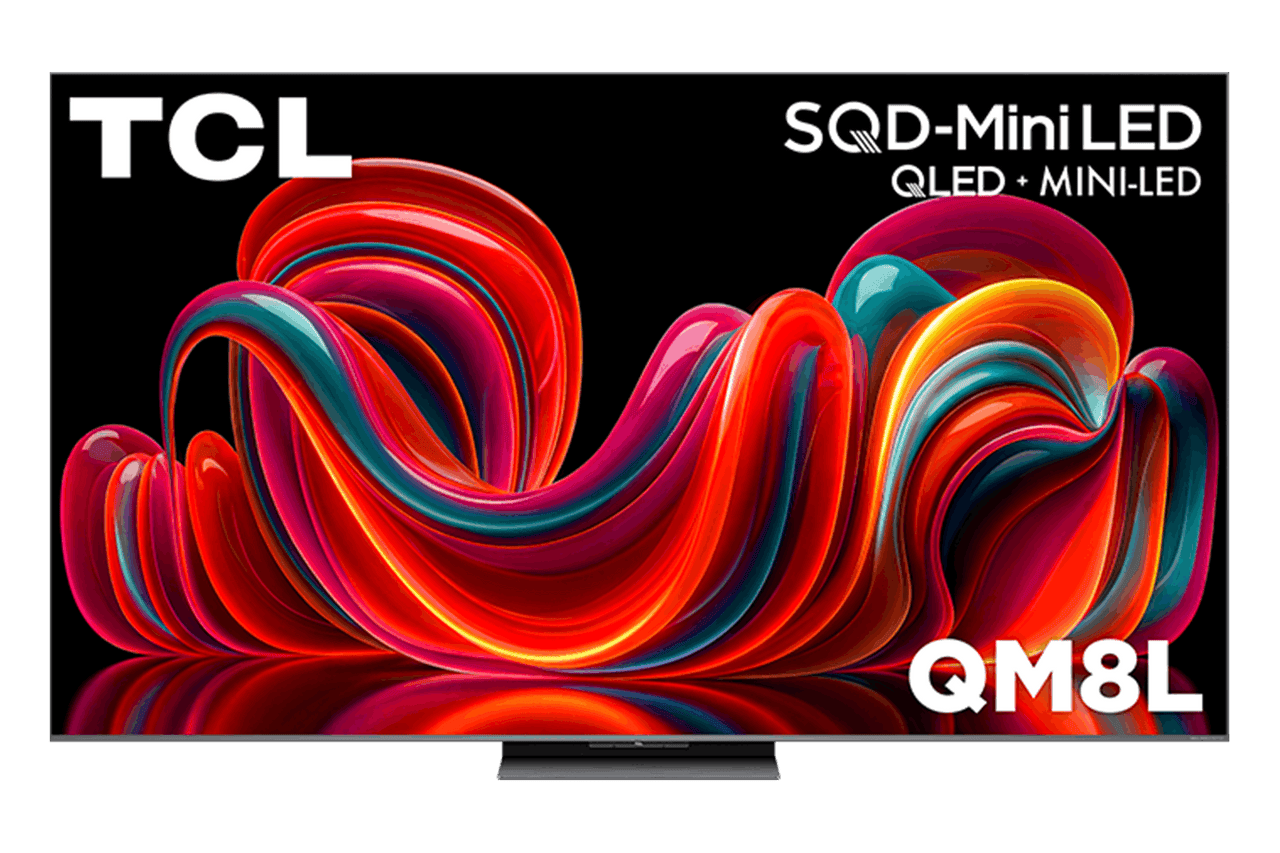
The TCL QM8L is the TV TCL wants to be known for. It’s the 2026 successor to the QM8K, and it’s the model reviewers keep pointing to as proof that TCL can compete above its price point. I read through the lab measurements and dug into buyer feedback to see whether the hype holds up once the TV is actually sitting in someone’s living room.
The specs, in plain English
The QM8L uses TCL’s SQD-Mini LED backlight, which pairs mini-LED zones with a wider quantum dot color range than last year’s model. It comes in 65, 75, 85, and 98 inches, priced from $2,499.99 to $5,999.99 direct from TCL. The 65 and 75-inch models get up to 4,000 local dimming zones, a 144Hz native refresh rate, and four full HDMI 2.1 ports, which is rare at this price.
| Size | Price |
| 65-inch (65QM8L) | $2,499.99 |
| 75-inch (75QM8L) | $2,999.99 |
| 85-inch (85QM8L) | $3,999.99 |
| 98-inch (98QM8L) | $5,999.99 |
TCL advertises up to 6,000 nits of peak brightness. Independent lab testing measured closer to 1,900 to 2,000 nits in a 10% window, which is still excellent, just not the number on the box. That gap between marketing peak and measured peak is normal in the TV industry, but it’s worth knowing before you compare spec sheets.
What lab testing found
Post-calibration, the QM8L measured a delta E of about 1.1 for color accuracy and 0.7 for grayscale, both well inside “you won’t notice a difference from reference” territory. Color coverage came in at 97.7% of DCI-P3 and 89.3% of the wider BT.2020 space, an improvement over the QM8K. Input lag in game mode measured under 10 milliseconds, which competes with dedicated gaming monitors.
The one recurring criticism in testing was some judder in specific film sequences, correctable through the motion settings menu. Out of the box, Filmmaker Mode also showed slightly higher color temperature error than the calibrated numbers above, so don’t judge the picture on default settings alone.
What actual buyers say
The praise from buyers lines up with the lab data. People consistently mention how bright and saturated the picture looks even in daylight, and gamers specifically call out the low input lag and 144Hz support as a real upgrade over their last TV.
The complaints are less about the panel and more about everything around it. The most common one is Google TV’s home screen getting cluttered with ads and recommendations that are hard to turn off. A smaller group of buyers report an early hardware issue, like a dead pixel cluster or a purple line, though this shows up in a small minority of reviews and is usually covered under the 1-year warranty if you catch it early. A few buyers also mention that customer service can be slow to respond when they do need a replacement.
None of these complaints are unique to the QM8L. They show up across TCL’s whole TV lineup, and honestly across most budget-to-mid TV brands. I cover how to protect yourself in the warranty and returns breakdown.
How it compares to the QM8K
If you already own last year’s QM8K, the QM8L is a meaningful but not massive upgrade: better color gamut coverage, slightly improved dimming precision, and a lower starting price for equivalent screen sizes. If you’re buying fresh, there’s no reason to seek out the older QM8K when the QM8L costs less and performs better.
Who should buy it
The QM8L makes the most sense for anyone who wants flagship-level brightness and gaming specs without paying flagship prices. It’s a strong pick for a bright living room, a home theater setup, or a gaming rig that needs 144Hz and low input lag. If picture quality is your top priority and you don’t mind Google TV’s ad-heavy interface, this is one of the better values on the market right now.
If you’re on a tighter budget or don’t need the full mini-LED performance, it’s worth reading how to choose the right TCL TV for your budget before you commit to the flagship.
The bottom line
The QM8L backs up its marketing with real lab numbers, which is more than a lot of budget TVs can say. The picture quality complaints are minimal; almost everything buyers push back on is software or support related, not the screen itself. For the price, it’s hard to find a mini-LED TV that competes with it directly. If you want the full brand context before buying, start with is TCL worth it.
Keep reading: Is TCL Really Worth It?, Where to Buy TCL Electronics Safely, and How to Make Your TCL TV Last Longer.